 EN
EN

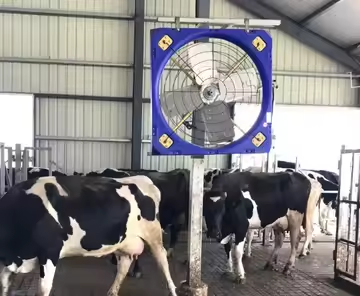
Thermostat-Driven Poultry Exhaust Fan Control for Precision Temperature Management
How thermostats activate poultry exhaust fans to maintain target temperature zones
In poultry houses, thermostats basically serve as the brains behind ventilation systems, turning on exhaust fans whenever temperatures go beyond what's safe for different types of birds at various stages of growth. The heat builds up fast inside these buildings from all sorts of sources - birds themselves generate warmth through their metabolism, there's the lights burning overhead, plus all the machinery running around. Especially problematic in those tightly packed barns where hundreds of chickens are crammed together. Sensors mounted on walls or hanging from ceilings spot when things get too hot or cold compared to what's considered normal (around 18 to 27 degrees Celsius works best for fully grown broilers while laying hens prefer slightly cooler temps between 21 and 26 degrees). When this happens, the fans kick in right away. Some newer control systems actually use something called PID logic which makes fans spin up slowly instead of just flipping them on and off like a light switch. This approach keeps temperatures stable within about half a degree of whatever target we set. And it really does make a difference. Research published by experts at the University of Georgia shows that if temperatures swing more than three degrees over time, broilers eat less efficiently and their immune systems start struggling too.
Stage-specific thermostat setpoints: Broilers vs. layers across growth phases
Temperature needs evolve sharply with physiology and production goals—requiring weekly recalibration of thermostat setpoints:
| Growth Phase | Broiler Setpoint | Layer Setpoint | Physiological Rationale |
|---|---|---|---|
| Day 1–7 | 32–34°C | 33–35°C | Chicks lack feathers and thermoregulatory capacity; warmth supports organ maturation and gut development |
| Week 2–3 | 28–30°C | 29–31°C | Rapid skeletal and muscle growth increases metabolic heat output |
| Week 4–market | 18–21°C | 20–23°C | Full feathering enables efficient natural thermoregulation; lower temps support breast yield and footpad health |
| Laying period | N/A | 21–26°C | Narrow band optimizes calcium metabolism, eggshell quality, and sustained production (USDA APHIS Poultry Guidelines, 2023) |
The temperature pattern for broilers tends to drop about 3 degrees Celsius each week starting from day seven. Layers need much more consistent temperature ranges when they're at their laying peak though. When setting up ventilation systems, weight gain matters a lot. Take a look at this: birds weighing around 2.5 kg produce approximately 12 watts per square meter in sensible heat. That's almost twice what we see from lighter birds at 1.2 kg. Because of these differences, adjusting fan settings dynamically becomes absolutely necessary for proper climate control in poultry houses.
Timer-Based Minimum Ventilation Strategies for Early-Stage Broilers
Newborn chicks struggle with regulating their body temp during the brooding period and react strongly to things like drafts, humidity levels, and air movement around them. The use of timer controlled minimum ventilation systems offers steady, gentle air exchanges which helps get rid of excess moisture and carbon dioxide without making the birds cold. Most farms run standard ventilation cycles like 60 seconds on followed by 240 seconds off. These settings help keep the litter dry enough while still holding onto necessary warmth, stopping ammonia buildup from going past 25 parts per million according to poultry welfare guidelines from AVMA back in 2021. If there's too much ventilation happening, it might actually slow down growth rates by about 15%. On the flip side, not ventilating enough leads to respiratory problems and damp litter conditions. Timer controlled fans go through roughly 20 thousand start stop cycles every year on average broiler farms, so checking those relays, bearings, and shutter mechanisms regularly isn't just something to consider doing but absolutely needs attention for reliable operation over time.
Integrating Thermostat, Humidity, and Timer Controls into a Unified Poultry Exhaust Fan System
Why layered control logic outperforms single-sensor strategies in real-world houses
Temperature based controls just don't cut it during those sudden watering events where humidity jumps 20% RH within minutes, or worse yet, overnight when temps plummet but dampness stays around. And going the other extreme with only humidity monitoring misses out on cold stress issues that plague birds during winter nights. The smart approach combines multiple factors working together. Thermostats still handle the main fan operation as usual. When humidity creeps above 65% RH though, those extra side wall or ridge fans kick in to tackle excess moisture in the litter. Meanwhile minimum ventilation timers keep things moving even if sensors aren't showing anything alarming. Real world testing across 42 US broiler operations found this combined method slashed heat stress deaths by about 22 percent and reduced wet litter problems by nearly 40% over traditional thermostat systems according to recent findings published in Poultry Health Today.
Practical implementation tips: Sensor placement, calibration, and alarm thresholds
Robust integration hinges on hardware discipline and operational rigor:
- Sensor placement: Install thermostats at bird height (30–50 cm above litter), centered in the house and shielded from direct heater radiation or door drafts. Position humidity sensors away from evaporative cooling pads or misters to avoid false spikes.
- Monthly calibration: Cross-check all sensors against traceable handheld reference devices. Discard units drifting beyond ±2°C (temperature) or ±5% RH—accuracy loss directly correlates with increased condemnations and reduced uniformity.
-
Staged alarms:
Alert Level Threshold Action Warning 28°C or 70% RH Notify manager via SMS/email Critical 32°C or 80% RH Auto-activate backup fans + alert supervisor
Minimum ventilation timers should begin at 8-minute intervals (e.g., 30 sec on/450 sec off) for day-old chicks and transition to continuous operation by week 6—aligned with increasing heat load and CO₂ production. This staged progression prevents both hypothermia and hypercapnia while preserving energy efficiency.
FAQs
-
What role do thermostats play in poultry houses?
Thermostats activate exhaust fans when temperatures rise above safe levels for different bird types, helping maintain optimal conditions by controlling temperature swings.
-
Why is timer-based ventilation important during the brooding period?
Timer-based ventilation provides steady air exchanges that remove excess moisture and CO2 without chilling the chicks, ensuring dry conditions and preventing ammonia buildup.
-
How does integrated control logic benefit poultry houses?
Integrated control logic combining thermostats, humidity, and timer controls address multiple climate factors, reducing stress and improving overall bird health.