 EN
EN
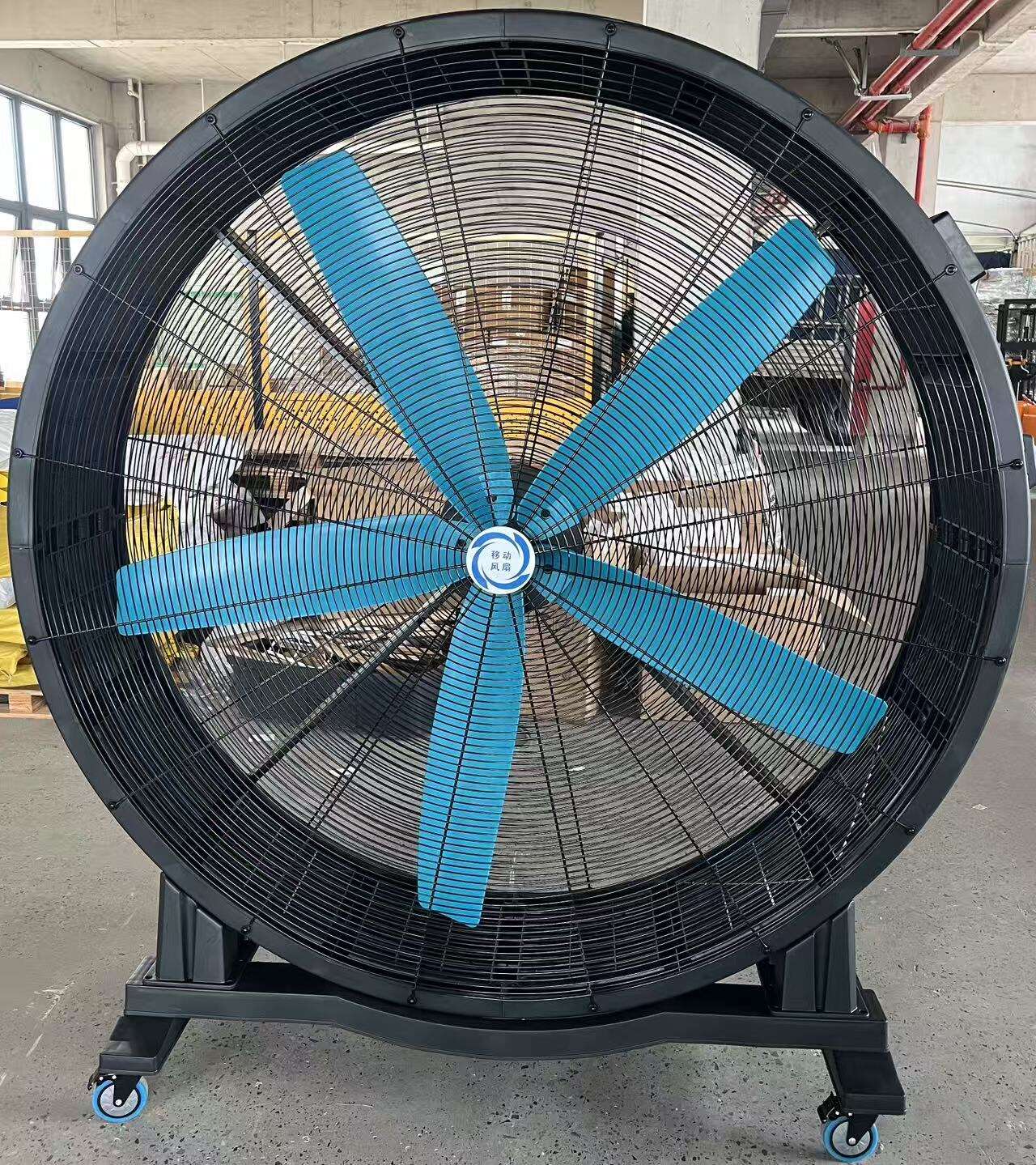
How HVLS Fans Work: The Science of Efficient Airflow
Understanding HVLS Fan Technology and Working Principle
HVLS fans, also known as High Volume Low Speed units, feature those big aerodynamic blades that can stretch up to 24 feet wide. These massive fans move incredible amounts of air, around 250,000 cubic feet per minute actually, but they do it all while spinning really slowly, under 100 revolutions per minute. Regular ceiling fans work completely different. They spin much faster, between 200 and 300 RPM, creating all sorts of turbulence and just blowing air around in small spots. But HVLS systems create this smooth airflow column that drops down gently and then spreads out across big factory floors or warehouse spaces. The slow rotation means less wear and tear on the equipment too. According to recent data from the U.S. Department of Energy, running costs are surprisingly low, maybe only about thirty cents an hour. That kind of efficiency makes these fans capable of doing the job of eight to ten standard fans combined.
Airflow Mechanics and Columnar Airflow Dynamics
HVLS fans work their magic through something called laminar airflow, which basically comes down to how fluids move around. The blades on these big ceiling fans are set at angles between 3 and 8 degrees, and this creates what engineers call a pressurized air column. This column then pushes air straight down toward the floor where it picks up speed, usually hitting somewhere between 5 and 8 miles per hour when it gets there. Once the moving air reaches the ground, it doesn't just stop it actually spreads out across the floor like ripples in water, creating what's known as a ground effect. This effect lets the air circulate throughout the space, sometimes reaching as far as 100 feet away from the fan itself. According to those fancy computer models they use for fluid dynamics analysis, these large fans can cover about 85% of a building that's larger than 50,000 square feet. That's way better than the roughly 35% coverage we typically see from smaller, faster spinning fans.
Boundary Layer Disruption and Thermal Destratification
In industrial environments, heat naturally accumulates near ceilings, forming vertical temperature gradients of 15–25°F. HVLS fans disrupt this boundary layer by continuously mixing air masses through columnar flow, reducing temperature differences to ≏°F. This thermal destratification allows HVAC systems to operate more efficiently, cutting annual runtime by 20–30%.
The Induced Air Effect: Maximizing Air Movement with Minimal Energy
HVLS fans work their magic by creating what's called the induced air effect. Basically, every time those big blades spin around, they suck in anywhere from three to five times their own volume of air from the surrounding area. What happens next is pretty cool too. Even after these fans shut down, the extra air keeps moving around for about a minute or so, creating this nice rolling effect across the whole room. And when we hook them up with those variable frequency drives (VFDs), things get even better. Studies show buildings can save somewhere around 70% on their energy bills compared to regular old ventilation systems. Makes sense why so many warehouses and factories are making the switch nowadays.
Energy Efficiency and Cost Savings of HVLS Fans vs. Traditional Systems
Reduced Power Consumption in Industrial and Commercial Cooling
HVLS fans use around 90% less electricity compared to regular HVAC systems because of how they move air efficiently throughout large spaces. Take a 24 foot model running on just 1.5 kW for example it can actually cool down or heat up spaces as big as 15,000 square feet. That means facilities don't need anywhere near as many small fans anymore maybe only about half as many. According to some research from EnergyLogic back in 2023, this setup cuts down those expensive peak demand charges by somewhere between 15% and 30%. During hot weather months these fans make workplaces feel cooler and more comfortable. When winter comes along though, flipping the blades so they spin the other way helps push that warm air stuck up near the ceiling back down where people are. This simple trick saves money on heating bills too, cutting costs by roughly 20% to 30% thanks to better temperature distribution.
Long-Term Operational Cost Benefits of HVLS Ceiling Fans
HVLS fans typically deliver return on investment within 12–24 months, with facilities reporting 30–50% annual HVAC energy savings. Key advantages include:
- Lower maintenance costs: Absence of ductwork and fewer moving parts reduce upkeep by 40%
- Extended HVAC lifespan: Reduced system runtime delays equipment replacement by 3–5 years
- Productivity gains: Consistent temperatures improve worker output by 8–12% (ASHRAE reports 2024)
One example includes a food processing plant that replaced 26 smaller fans with just four HVLS units and saved $60,000 annually in energy costs. With an energy footprint of only 0.8–1.2 kWh, these fans deliver unparalleled operational savings without sacrificing comfort or performance standards.
Key Applications of HVLS Fans in Large Industrial and Commercial Spaces
Optimizing Air Circulation in Warehouses and Manufacturing Facilities
High volume low speed fans keep the air moving evenly throughout warehouses that are over 15,000 square feet, helping to prevent moisture from accumulating on machinery and stored goods. Unlike traditional ceiling fans that push air straight down, HVLS fans diffuse air more horizontally, reducing the potential for dust accumulation by approximately 20%. This constant airflow also improves indoor comfort levels, facilitating a safer environment for workers. Reports indicate that a 24-foot HVLS fan can complete full air circulation in large facilities every eight minutes or so, ensuring that air is continuously fresh and balanced.
Enhancing Comfort and Air Quality in Retail and Public Spaces
HVLS fans are not just for factories. They are also increasingly being used in busy spaces like gyms and airports, where constant airflow can mean the difference between suffocating heat and refreshing comfort. In agricultural settings, these fans help maintain a consistent breeze in dairy barns, significantly improving animal health by dissipating ammonia and preventing overly hot areas, crucial for maintaining livestock wellbeing.
Improving Indoor Air Quality, Comfort, and Worker Productivity
HVLS fans move around 30,000 cubic feet of air per minute, significantly reducing indoor pollutants like dust and VOCs by approximately 30% in factories and warehouses. Studies from 2024 show that their effective air circulation can result in roughly 92% of employees feeling comfortable most of the time. The fans also contribute to HVAC optimization and reduce temperature discrepancies across large spaces, which helps to maintain product quality and prevent costly losses due to temperature-driven spoilage. By fostering healthier and more consistent indoor air quality, these fans are proving to be a wise investment for a range of commercial applications.
Engineering Design of HVLS Fans
HVLS fans stand out due to their aerodynamically efficient design. Blades made of high-quality aluminum, similar to aircraft components, have an airplane wing shape that maximizes airflow while minimizing resistance. Key structural features like reinforced steel hubs help maintain the stability of fans with expansive blade diameters. Low noise levels are achieved through precision balancing and vibration-dampening technologies, ensuring these fans maintain optimal performance over extended operational lifespans of over 50,000 hours. Their robust construction also guarantees resistance to environmental factors, keeping the fans operational even in extreme industrial conditions.
FAQ Section
What are HVLS fans and how do they work?
HVLS stands for High Volume Low Speed. These are large fans with blades that can be up to 24 feet wide. They move vast amounts of air slowly, usually at less than 100 revolutions per minute, which creates a column of air that spreads across large areas like warehouses or factory floors.
How do HVLS fans save on energy costs?
HVLS fans use around 90% less electricity compared to traditional HVAC systems by efficiently circulating air. This can reduce expensive peak demand charges by 15% to 30% and cut heating and cooling costs significantly.
In which locations are HVLS fans most effective?
HVLS fans are typically most effective in large spaces such as warehouses, manufacturing facilities, gyms, airports, and agricultural buildings like dairy barns. They are useful in any large area that requires consistent air circulation and temperature regulation.