 EN
EN

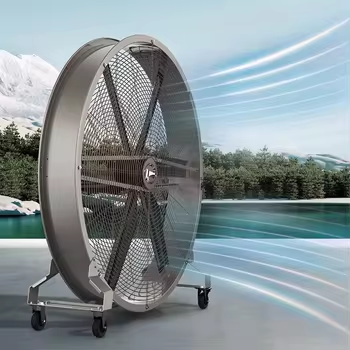
Impact of Room Size and Shape on HVLS Fan Airflow Efficiency
The size and shape of a facility has a major impact on how well HVLS fans work, according to recent studies showing that around 80% of air movement is actually shaped by the building's layout (Air Movement Survey 2023). For rectangular spaces longer than 100 feet, installing several fans makes sense, placing them roughly 1.5 times the blade diameter apart works best. Circular buildings tend to get better results when fans are mounted centrally rather than spread out. And don't forget about ceiling height either. Spaces where ceilings sit lower than 20 feet generally need smaller fans, typically no bigger than 12 feet across, otherwise there's too much downward airflow which can be uncomfortable for people working underneath.
Avoiding Structural Obstructions Like Beams and Shelving
Maintain 36"–48" clearance around fan peripheries to prevent turbulence from I-beams or trusses, airflow reduction near storage racks, and vibration transfer through support structures. Fan downrods should extend 6–8 ft below ceiling obstructions to ensure laminar airflow and minimize disruption from overhead infrastructure.
Preventing Airflow Overlap Through Strategic HVLS Fan Positioning
Optimal fan spacing based on coverage radius (FanTech Institute 2022)
| Facility Width | Fan Diameter | Recommended Spacing |
|---|---|---|
| <80 ft | 16-20 ft | 50-65 ft apart |
| 80-120 ft | 20-24 ft | 65-80 ft apart |
| >120 ft | 24+ ft | 80-100 ft apart |
In L-shaped buildings, use staggered placement to maintain consistent airspeed (40–50 fpm) across zones and eliminate dead spots caused by angular layouts.
Application-Specific Placement in Warehouses, Commercial Buildings, and Agricultural Facilities
Warehouses:
- Align fans parallel to storage aisles
- Position above PIV pathways at a 12–15° tilt to enhance worker cooling
Retail Spaces:
- Install near entrance vestibules within a 15–20 ft range to combat infiltration of hot or cold air
- Avoid directing airflow over checkout counters to prevent discomfort and equipment issues
Agricultural Settings:
- Mount fans 30–40 ft from exterior doors in livestock barns to reduce drafts while promoting ventilation
- Use 30% closer spacing in high-humidity greenhouses for improved moisture control
Facilities with mezzanines require tiered installations—one unit per 30 ft elevation change—to ensure vertical air mixing and thermal uniformity.
Sizing HVLS Fans: Diameter, Coverage, and Spacing Guidelines
Matching HVLS Fan Diameter to Space Square Footage
Proper sizing aligns blade diameter with facility square footage:
| Facility Size (Sq. Ft.) | Ideal Fan Diameter | Coverage Per Fan |
|---|---|---|
| 1,000 – 3,000 | 8–10 ft | 1–2,500 Sq. Ft. |
| 3,000 – 8,000 | 12–14 ft | 3–6,000 Sq. Ft. |
| 8,000–15,000 | 16–18 ft | 8–12,000 Sq. Ft. |
| 15,000+ | 20–24 ft | 15,000+ Sq. Ft. |
For irregularly shaped spaces, increase the calculated diameter by 15–20% to compensate for airflow resistance and complex circulation paths.
Determining the Number of HVLS Fans Needed for Uniform Air Distribution
HVLS fans around 24 feet long generally handle about 20,000 square feet when there are no walls or shelves getting in the way. But if the space is divided into sections or filled with tall storage racks, then several smaller fans might work better instead. There's something called the 5 to 1 rule that folks often use for figuring out coverage area. Basically, multiply the fan diameter by five to get an idea of how far it will push air horizontally during cooling operations. Take a 20 foot model for instance it tends to affect airflow across roughly 100 feet. When dealing with big warehouse spaces, most installers recommend spacing fans between 60 and 120 feet apart. Of course this depends on what's blocking the path and how high the ceiling actually is.
Fan Spacing Best Practices for Complete Coverage Without Dead Zones
- Arrange fans in a staggered grid pattern to eliminate overlapping downdrafts and fill coverage gaps
- Maintain at least 2 feet clearance from walls and fixed equipment
- Reduce spacing by 25% in areas with ceiling obstructions like ductwork
- Align fan positions with HVAC zones when integrating systems
Improper spacing increases energy costs by 18–22% due to compensatory HVAC usage (2023 airflow simulation study).
Maximum HVLS Fan Size Based on Ceiling Slope and Mounting Height
Ceiling height limits permissible fan diameter:
| Mounting Height | Maximum Fan Diameter |
|---|---|
| 12–14 ft | 12 ft |
| 15–18 ft | 16 ft |
| 19–22 ft | 20 ft |
| 23+ ft | 24 ft |
For sloped ceilings exceeding 15°, reduce maximum diameter by 20% and confirm structural load capacity exceeds the fan’s weight by three times. Always maintain 36” clearance below sprinkler heads and 24” from lighting fixtures to comply with NFPA code requirements.
Ceiling Height and Mounting Structure Requirements for HVLS Fans
Mounting Options for Different Ceiling Types: I-Beam, Bar Joist, and Z-Purlin
Getting the right mounting hardware for HVLS fans is essential when matching them to different building structures. For those working with I-beam ceilings, bolting directly onto the beams using special vibration dampening plates gives the best stability possible. When dealing with bar joists, suspension kits work wonders because they spread out the weight over several joists at once. Z-purlin roof systems usually call for reinforced brackets since these installations can cause metal fatigue if not properly supported. The numbers tell a clear story too improper installation cuts down on fan performance by around 18%, and companies end up spending about $7,500 extra each year just on maintenance according to recent industry reports from Material Handling Institute back in 2024. That kind of money adds up fast for facility managers watching their budgets closely.
Ensuring Secure HVLS Fan Installation for Long-Term Performance
Mounting systems must support at least twice the fan’s operational weight to accommodate rotational forces. Leading manufacturers recommend quarterly torque checks on bolts and annual structural inspections. Facilities using 24-foot fans report 23% fewer vibration-related failures when equipped with seismic-rated hardware (Facility Safety Review 2023).
Clearance Requirements From Lighting, HVAC Diffusers, and Fire Sprinklers
| Component | Minimum Vertical Clearance | Horizontal Buffer Zone |
|---|---|---|
| Lighting | 3-5 feet | 50% of blade diameter |
| HVAC Diffusers | 6-8 feet | Full blade span |
| Fire Sprinklers | 2-4 feet | 18-24 inches |
These clearances prevent interference with system operations and ensure compliance with NFPA 13 fire codes. Facilities adhering to these standards reduce HVAC conflicts related to fan placement by 82% (ASHRAE Journal 2024).
Integrating HVLS Fans with HVAC Systems for Energy Efficiency
How HVLS Fans Enhance HVAC Efficiency and Reduce Energy Costs
High volume low speed fans actually work pretty well with HVAC systems because they spread out the conditioned air across big areas. When it's cool season, these fans get rid of those dead spots where no air moves, so people can turn their thermostats up around 4 degrees Fahrenheit without feeling uncomfortable. For heating purposes, just flipping the direction of the fan blades helps bring down that hot air stuck up near the ceiling, which cuts down on how much heating is needed somewhere between 10 and maybe even 30 percent. Putting all this together means businesses can save quite a bit on their yearly HVAC costs, probably anywhere from 20 to half of what they used to spend, all while keeping everyone comfortable at stable temperatures throughout the building.
Best Practices for Seamless HVLS Fan and HVAC System Integration
Make sure fans sit at least twice their blade diameter distance from HVAC vents so they don't mess up how air gets distributed throughout the space. Getting fan speed to match up with HVAC operation through programmable controls works best. During colder months, running fans slower helps keep warm air from getting mixed too much, while cranking them up during hotter weather really boosts cooling efficiency. Don't put fans directly under diffusers or exhaust outlets either since this creates all sorts of unwanted air movement problems. For buildings equipped with radiant floor heating systems, directing airflow downward tends to produce better results overall, though there are definitely exceptions depending on specific building layouts and insulation quality.
Seasonal Operation: Optimizing Fan Direction in Summer vs. Winter
Summer Mode:
- Clockwise rotation (7–8° blade pitch) creates a wind chill effect
- Operate at 50–70% speed to keep air velocity below 2 m/s for occupant comfort
Winter Mode:
- Counterclockwise rotation (3–4° pitch) gently pushes warm air downward
- Run at 20–30% speed to minimize drafts while eliminating temperature stratification
Risks of Overreliance on HVLS Fans Without Proper HVAC Coordination
HVLS fans simply aren't designed to take the place of proper heating or cooling systems. When facilities push beyond what ASHRAE recommends for air changes per hour, particularly when moving air faster than 2 meters per second, they often end up creating more heat through convection instead of reducing it. This actually makes the HVAC system work harder than intended. Before installing these large fans, it's wise to run some Computational Fluid Dynamics modeling first. This helps ensure the fans won't mess up existing ventilation patterns or cause problems with smoke control systems that might already be in place throughout the building.
Safety, Compliance, and Code Requirements for HVLS Fan Installations
Fire Safety Compliance: Integration With Alarms and Sprinkler Systems
HVLS fans must automatically shut off during emergencies via integration with fire detection systems. NFPA 72 (2023) requires synchronization with smoke detectors, while NFPA 13 mandates 18–24 inches of clearance between fan blades and sprinkler heads to ensure unimpeded water dispersion during activation.
Hazardous Locations to Avoid During HVLS Fan Placement
Avoid installing fans in areas with combustible dust (OSHA 1910.307) or flammable vapors, such as chemical plants or grain silos. Units placed near electrostatic-prone zones increase ignition risk by 34% (NFPA 77:2022). Prioritize open, non-hazardous areas away from volatile material storage.
Meeting OSHA, NFPA, and Local Building Code Standards
A 2023 Industrial Safety Review found 62% of violations stemmed from improper anchoring or electrical wiring. Key compliance points include:
- OSHA 1926.28: Use load-rated mounting hardware capable of supporting 200+ lb fans
- NFPA 70 Article 410: Install dedicated circuits with ground-fault protection
- Local codes: Provide at least 30" vertical clearance in seismic zones
Always consult architectural plans and coordinate with AHJs (Authority Having Jurisdiction) to meet region-specific regulations before installation.
FAQ Section
FAQ
1. Why is it important to consider room size and shape when installing HVLS fans?
Room size and shape significantly affect airflow distribution and efficiency. Rectangular spaces may require multiple fans, while circular spaces benefit from centralized fan placement.
2. What should be avoided during HVLS fan installation?
Avoid placing fans near structural obstructions like beams and shelving. Ensure adequate clearance to prevent airflow turbulence and vibration transfer.
3. How can HVLS fans be integrated with HVAC systems?
HVLS fans enhance HVAC efficiency by distributing conditioned air evenly. They can be integrated by maintaining distance from HVAC vents and using programmable controls for fan speed matching.
4. What are the seasonal operation best practices for HVLS fans?
During summer, operate fans at 50-70% speed with a clockwise rotation to create wind chill. In winter, use a counterclockwise rotation at lower speeds to gently push warm air downward.
Table of Contents
- Impact of Room Size and Shape on HVLS Fan Airflow Efficiency
- Avoiding Structural Obstructions Like Beams and Shelving
- Preventing Airflow Overlap Through Strategic HVLS Fan Positioning
- Application-Specific Placement in Warehouses, Commercial Buildings, and Agricultural Facilities
- Sizing HVLS Fans: Diameter, Coverage, and Spacing Guidelines
- Ceiling Height and Mounting Structure Requirements for HVLS Fans
- Integrating HVLS Fans with HVAC Systems for Energy Efficiency
- Safety, Compliance, and Code Requirements for HVLS Fan Installations
- FAQ