 EN
EN

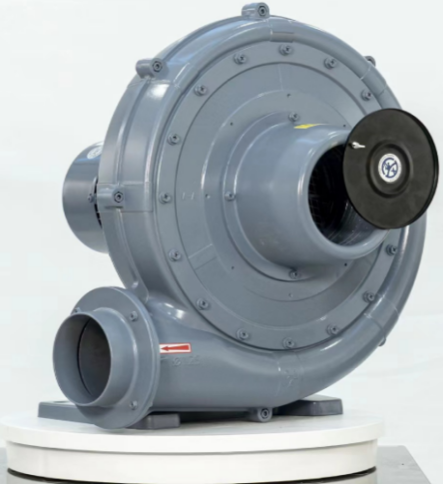
Understanding High-Capacity Industrial Exhaust Fans and Their Role in Large Facilities
What Defines a High-Capacity Industrial Exhaust Fan?
High-capacity industrial exhaust fans deliver 20,000–50,000 CFM (Cubic Feet per Minute), utilizing heavy-duty motors and corrosion-resistant housings to withstand extreme temperatures and particulate loads. Unlike standard models, they feature:
- Blade diameters ≥ 48" for broad coverage
- Motors of at least 1.5 hp with thermal overload protection
- Airflow velocities exceeding 3,000 fpm
According to a 2024 ventilation study by industrial engineers, facilities over 10,000 sq.ft. require fans rated at ≥ 30,000 CFM to maintain OSHA-compliant air changes per hour (ACH).
How High-Capacity Fans Differ from Standard Ventilation Systems
Standard 300–500 CFM fans are suitable for small workshops, but high-capacity units achieve 10,000+ CFM through optimized blade angles (typically 35°–45° pitch) and centrifugal force designs. This enables them to reduce ambient temperatures by up to 15°F in manufacturing plants—three times more effective than conventional units, based on 2023 thermal imaging comparisons.
The Importance of Airflow Dynamics in Industrial Ventilation
Well-designed systems maintain laminar airflow between 400–800 fpm across workspaces, preventing dangerous fume accumulation. Research from industrial ventilation specialists shows that optimized airflow patterns can reduce HVAC energy costs by 28% while achieving 12–15 complete air changes per hour.
Sizing and Selecting the Right Industrial Exhaust Fan Based on CFM and Facility Needs
Calculating Required Airflow (CFM) for Warehouses and Manufacturing Plants
Accurate CFM calculation is essential for effective ventilation. Use the formula:
CFM = (Area × Height × Air Changes per Hour) / 60
Manufacturing plants needing heat dissipation often require 20–30 air changes per hour, compared to 4–6 for non-hazardous storage warehouses. For example, a 50,000 sq ft warehouse with 25-foot ceilings would need:
(50,000 × 25 × 6) / 60 = 125,000 CFM
The CFM calculation methodology developed by airflow experts emphasizes adjustments for localized heat sources and particulate loads.
Matching Fan Capacity to Building Dimensions and Usage
| Facility Type | Typical CFM Requirements | Key Influencing Factors |
|---|---|---|
| Automotive Plant | 300,000–500,000 | Welding fumes, heat from presses |
| Food Storage Warehouse | 80,000–150,000 | Humidity control, condensation |
| Electronics Assembly | 200,000–350,000 | ESD prevention, cleanroom needs |
Strategic placement enhances performance—fans installed ≥ 20 ft above floor level in high-bay facilities achieve 18% better air dispersion, according to the Industrial Ventilation Journal (2023).
Avoiding Common Sizing Mistakes in High-Capacity Ventilation Systems
Three critical errors undermine system effectiveness:
- Underestimating Static Pressure: Ductwork resistance can reduce effective airflow by 22–40% in complex layouts.
- Ignoring Future Expansion: 68% of facilities exceed original CFM needs within five years of installation.
- Overlooking Noise Constraints: A 72-inch centrifugal fan moving 250,000 CFM generates 85 dB—exceeding OSHA’s 8-hour exposure limit.
Engineers recommend designing with a 20% capacity buffer and using CFD (Computational Fluid Dynamics) simulations for spaces over 100,000 sq ft.
Types of Industrial Exhaust Fans: Axial, Centrifugal, and HVLS Applications
Comparing Axial, Centrifugal, and High-Volume Low-Speed (HVLS) Fans
When it comes to industrial exhaust systems, there are basically three different types of fans on the market. First up we have axial fans which push air along the same line as their spinning blades. These work great in places where lots of air needs moving but pressure isn't so important, think big warehouses or manufacturing floors. Then there's centrifugal fans that twist the airflow through about 90 degrees using those spinning vanes inside. They're really good when dealing with stuff like dust filled spaces or long duct runs where pressure drops matter. Lastly, there are these massive High Volume Low Speed fans known as HVLS. Running much slower than regular fans, they create nice even airflow throughout large open spaces while actually consuming less power overall. Many facilities have started switching to these because they cut down on energy costs without sacrificing comfort levels.
Best Use Cases for Each Fan Type Across Industries
In places like automotive assembly lines and food manufacturing facilities where dust and debris aren't major concerns, axial fans tend to be the go-to choice for ventilation needs. When dealing with harsher environments such as chemical processing units or metal casting operations where the air is thick with particles, centrifugal fan systems generally do a better job handling all that gritty stuff without clogging up. For massive spaces like airplane maintenance bays or big box warehouses needing good overall air circulation across large areas rather than quick air turnover, high volume low speed (HVLS) fans make the most sense. Getting this right isn't just about meeting those OSHA airflow requirements either it actually saves money in the long run by keeping energy costs down while still maintaining safe working conditions for everyone on site.
Designing and Installing Efficient Ventilation Systems in Large Industrial Spaces
Strategic Fan Placement for Optimal Air Circulation
When roof mounted exhaust fans are paired with intake vents at floor level, they create these natural air movement patterns that actually pull out about 30 percent more dust and particles compared to when everything's just randomly placed around. The key thing though is making sure nothing blocks the airflow path like structural beams or big machines sitting in the way. Also worth noting is placing these systems close to where heat tends to build up most in production spaces. According to some industry research, getting the height right on these installations can cut down on heating and cooling system workload by nearly a quarter in typical warehouse environments. That kind of efficiency makes a real difference over time both financially and operationally.
Balancing Ventilation Effectiveness with Energy Consumption
VFDs help control airflow much better than standard systems, which saves money when activity levels drop off. According to research published last year by ASME's Mechanical Design journal, combining these drives with occupancy sensors on exhaust fans can cut energy bills by around 18% each year. To get the most out of such systems, there are several important considerations. First, make sure the motor power matches what's actually needed for air flow requirements. Second, install bearings rated for heat if operating in warm conditions. And third, look at housing designs that reduce air resistance since turbulent airflow wastes energy over time. These adjustments might seem small but they add up significantly in terms of both cost savings and environmental impact.
Overcoming Installation Challenges in Complex Industrial Environments
Retrofitting exhaust systems in active facilities requires close coordination between structural and HVAC teams. Challenges include reinforcing roofs to support 800+ lb centrifugal fans and integrating new ductwork with existing infrastructure. Pre-installation laser scanning of utilities prevents 92% of spatial conflicts in tight spaces, according to recent retrofit case studies.
Energy Efficiency, Smart Controls, and Maintenance for Long-Term Performance
Maximizing Efficiency with VFDs, Smart Sensors, and Predictive Controls
Variable Frequency Drives (VFDs) enable dynamic motor speed adjustments, significantly reducing energy use during partial-load operation. When combined with smart sensors that monitor particulate levels and humidity, predictive control systems automatically optimize performance. Facilities using these integrated technologies report 15–30% energy savings over fixed-speed systems while maintaining required ventilation rates.
Routine Maintenance Practices to Extend Fan Lifespan
Bi-monthly inspections of bearings, belts, and blades prevent unexpected failures in high-capacity systems. Predictive techniques like vibration analysis and thermal imaging detect wear early, extending equipment life by 25–40%. Regular cleaning of housings and filters maintains peak airflow and reduces mechanical strain.
Ensuring Compliance with OSHA, EPA, and Industry Safety Standards
Keeping exhaust systems in good shape helps facilities stay within OSHA's exposure limits for harmful airborne substances and keeps them aligned with EPA air quality standards. Newer systems come equipped with automatic reporting features that make preparing for audits much easier since they track all the necessary maintenance records and performance metrics over time. Plants that maintain proper ventilation typically face around 40 percent fewer issues during inspections than facilities still using old school equipment. This difference matters because non-compliance can lead to costly fines and operational disruptions down the line.
FAQ Section
What is a high-capacity industrial exhaust fan?
A high-capacity industrial exhaust fan is designed to deliver large volumes of air, typically between 20,000 and 50,000 cubic feet per minute (CFM), and is equipped with heavy-duty motors and corrosion-resistant housings to withstand extreme operational conditions.
Why do large facilities require high-capacity exhaust fans?
Large facilities require high-capacity exhaust fans to ensure adequate air changes per hour (ACH) for compliance with safety standards like OSHA, and to maintain healthy air quality by dispersing heat and removing particulates and fumes.
What factors should be considered when sizing an exhaust fan for a facility?
Factors to consider include the size of the facility, the height of ceilings, the number of air changes required per hour, the presence of localized heat sources, and particulate loads.
How do axial, centrifugal, and HVLS fans differ?
Axial fans move air along the line of the spinning blades and work well where high airflow is needed without much pressure. Centrifugal fans turn airflow 90 degrees, making them ideal for spaces with high particulate loads or long duct runs. HVLS fans operate at lower speeds but provide large-scale air circulation with reduced energy consumption.
What are the benefits of using Variable Frequency Drives (VFDs) in ventilation systems?
VFDs adjust motor speeds dynamically during partial-load operations, reducing energy consumption and costs while maintaining ventilation requirements.
Table of Contents
- Understanding High-Capacity Industrial Exhaust Fans and Their Role in Large Facilities
- Sizing and Selecting the Right Industrial Exhaust Fan Based on CFM and Facility Needs
- Types of Industrial Exhaust Fans: Axial, Centrifugal, and HVLS Applications
- Designing and Installing Efficient Ventilation Systems in Large Industrial Spaces
- Energy Efficiency, Smart Controls, and Maintenance for Long-Term Performance