 EN
EN

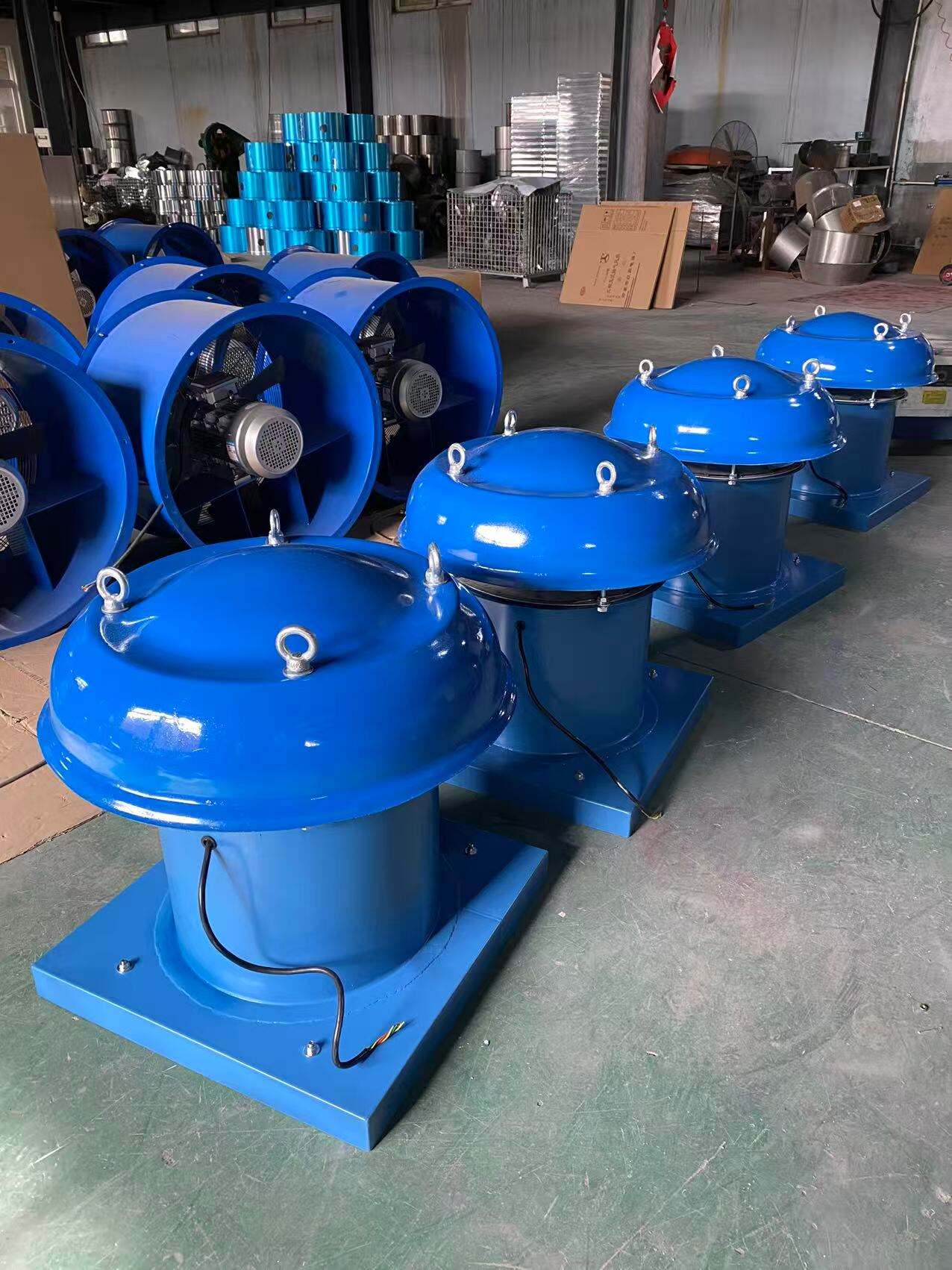
Why Coastal Environments Accelerate Roof Fan Corrosion
Electrochemical Corrosion Triggered by Salt Air and High Humidity
The air near coastlines sets up the perfect environment for metals to break down faster because of chemical reactions happening at the molecular level. When salt particles settle on metal surfaces, they leave behind chloride ions that work their way through protective coatings and mess with the natural protective layer on the metal. If the humidity stays above 60% most of the time, it creates a constant thin layer of moisture on metal parts. This moisture enables something called galvanic corrosion, where certain parts of the metal (like the sharp edges of blades) start dissolving away while other areas help reduce oxygen levels in the surrounding environment. Roof fans installed in these conditions tend to show problems pretty quickly - the housing gets thinner over time and the blades erode. Research indicates that metals corrode anywhere from 5 to 10 times faster in coastal areas compared to dry inland locations according to industry reports from 2023. The temperature changes throughout the day make things worse too. As temperatures rise and fall, tiny cracks in protective coatings expand, letting even more salt get inside. Standard carbon steel roof fans typically won't last much beyond 2 or 3 years before failing completely when placed in marine environments without proper protection measures.
The Chloride-Humidity Threshold: How >70% RH + >200 ppm Chlorides Drive Pitting and Oxidation
Corrosion accelerates synergistically when both relative humidity exceeds 70% and chloride concentrations surpass 200 ppm—a threshold confirmed by field and laboratory research. At this point:
- Moisture films become continuous, enabling unrestricted ion transfer
- Chlorides concentrate in microscopic defects, generating localized acidic micro-environments
- Passivation breakdown initiates metastable pits that mature into deep cavities
| Corrosion Parameter | Below Threshold | Above Threshold |
|---|---|---|
| Pit Growth Rate | <0.1 mm/year | >1.2 mm/year |
| Oxide Layer Stability | Maintained | Compromised |
| Failure Risk | Low | Critical |
These conditions prevail during 65% of daylight hours in tropical coastal regions (ASTM 2023). Salt-laden winds deposit over 500 ppm chlorides on fan surfaces, while oceanic humidity rarely drops below 75%. The resulting pitting compromises structural elements like motor mounts, while uniform oxidation flakes off protective layers—demanding purpose-built corrosion resistance strategies.
Corrosion-Resistant Materials for Roof Fans in Marine Climates
Aluminum, Galvalume, and Zinc-Nickel Alloys: Performance Comparison for Roof Fan Housings and Blades
Aluminum alloys are known for being light weight and naturally resistant to corrosion thanks to those self healing oxide layers they form. These properties make them work pretty well in areas near the coast where conditions aren't too extreme. But when exposed to salt air containing more than around 200 parts per million of chloride over extended periods, problems start showing up as small pits develop especially around joints and cut surfaces. Galvalume steel which has a coating of 55% zinc and 45% aluminum offers better protection against these issues. The zinc component actually sacrifices itself to protect cut edges while the aluminum part helps maintain protection over time. If maximum durability is what matters most, then zinc nickel alloys really stand out. They can resist red rust formation for over 1000 hours according to ASTM B117 salt spray testing standards, beating regular galvanized coatings by about three times. Of course there are some tradeoffs worth considering though...
- Blade integrity: Aluminum’s fatigue resistance suits high-cycle applications; steel offers greater load-bearing capacity
- Housing durability: Zinc-nickel corrodes at roughly 1/8 the rate of pure zinc in marine atmospheres
- Lifecycle cost: Galvalume delivers a balanced value proposition—affordable upfront with a proven 25-year service life in coastal installations
Coating Thickness & Durability: Specifying ≥120 μm Zinc-Aluminum-Magnesium or ≥150 μm Zinc-Nickel for 1,500+ Hour Salt Spray Resistance
Just picking the right materials isn't enough if we don't get the coating specs right. Tests show that ZAM coatings need to be at least 120 microns thick to last between 1,500 and 2,000 hours in salt spray tests, which means they offer three times better protection than regular hot dip galvanizing. When dealing with really harsh coastal environments though, the story changes. Zinc nickel coatings actually need around 150 microns thickness to match what other coatings can do. The bottom line here is that when evaluating these coatings, manufacturers shouldn't rely solely on laboratory results. Real world conditions matter just as much, maybe even more so.
| Coating System | Min Thickness | Salt Spray Resistance | Critical Application Areas |
|---|---|---|---|
| Zinc-Aluminum-Magnesium (ZAM) | 120 μm | 1,500–2,000 hours | Fan housings, mounting brackets |
| Zinc-Nickel | 150 μm | 1,800+ hours | Fasteners, blade joints, hinges |
Edge sealing of cut surfaces and dielectric isolation between dissimilar metals—such as pairing aluminum blades with stainless steel hardware—are essential to prevent galvanic corrosion initiation. Third-party certifications like QUALICOAT Class 4 provide verifiable assurance of marine-grade durability.
Advanced Protective Coatings and Sealing Solutions for Roof Fans
PVDF and FEVE Paint Systems: C5-M Certified Coatings for Long-Term Roof Fan Protection
Coatings made from fluoropolymers like PVDF (Polyvinylidene Fluoride) and FEVE (Fluoroethylene Vinyl Ether) offer strong protection against corrosion problems in coastal areas for roof fans. These coating systems actually reach the top level of industrial durability standards known as ISO 12944 C5-M, which is specifically designed for harsh marine environments. What makes them work so well? The molecules are packed closely together creating a barrier that keeps out water, blocks UV damage, and stops chlorides from getting through. Lab tests show that coatings meeting C5-M standards can handle more than 1,500 hours in salt spray chambers without showing signs of failure like blisters, chalkiness, or damage around joints and screws. When installed properly, these coatings typically last 15 years or longer in areas with high chloride exposure. This means roof fans keep working efficiently without losing their shape or function, saving money by avoiding expensive repairs halfway through their expected lifespan.
Proactive Maintenance and Design Practices to Extend Roof Fan Lifespan
Eliminating Galvanic Corrosion: Stainless Fasteners, Dielectric Isolation, and Edge-Sealed Joints
Galvanic corrosion intensifies dramatically in coastal environments when dissimilar metals contact one another in salt-laden air—creating unintended electrochemical cells that rapidly degrade housings, brackets, and fasteners. Prevention requires integrated design and maintenance:
- Specify A2/A4 grade stainless steel fasteners, which resist salt-induced pitting and maintain tensile strength in humid, chloride-rich air
- Install dielectric isolation kits using non-conductive nylon or polymer sleeves to interrupt electrical pathways between metals
- Apply continuous marine-grade sealants—polysulfide or neutral-cure silicone—at all overlapping joints and flange interfaces
- Ensure edge-sealed seams exceed 5 mm coverage to block moisture intrusion along cut or welded edges
These combined approaches stop corrosion right where it starts, which helps maintain the structure's strength and can actually make those roof fans last anywhere from 5 to 7 extra years in areas near saltwater. For ongoing good performance, regular checks every six months are really important. Look closely at how tight all the bolts are, check if the sealant is still sticking properly, and watch out for any telltale signs of trouble like white rust spots or small pits forming. Pay special attention to the areas where everything mounts together and where the blades connect to the main unit since these spots tend to get damaged first.
FAQ
Why does coastal air cause roof fan corrosion?
Coastal air is rich in salt and humidity, creating ideal conditions for electrochemical reactions that accelerate the corrosion of metal components in roof fans.
What are some corrosion-resistant materials suitable for roof fans in marine climates?
Materials such as aluminum, Galvalume steel, and zinc-nickel alloys are recommended due to their durability and resistance to salt-induced corrosion.
How often should maintenance checks occur in coastal environments?
It is advisable to conduct maintenance checks every six months to ensure bolts are tight, sealants are intact, and to identify any early signs of corrosion like rust spots.